

Surgical retractors are important instruments used in the operating theatre retractor instruments space to hold tissues, organs, and wound edges away from the surgical field. They maintain adequate exposure and help surgeons view and access the target area during surgical procedures. There are various retractors used for superficial wounds, deep cavities, orthopaedic surgery, abdominal procedures, ENT procedures, and gynaecological applications. In this blog, we tell you about the different types of surgical retractors, surgical retractor uses and applications, and present a handheld surgical retractors guide.
Abdominal Retractors vs. Superficial Retractors
Both abdominal and superficial retractors are different in terms of the depth and type of tissue they hold aside. Their blade shape, size, and working profile determine where they are used effectively. Let us look at the differences between abdominal retractors vs superficial retractors below:
Abdominal retractors
These retractors have deeper, larger, or curved blades that hold back heavier abdominal tissue and give access to deeper surgical fields. They are used when surgeons need broader exposure in the abdominal cavity.
Superficial retractors
These retractors have angled and smaller blades or prongs designed for wound edges, skin, and shallow muscle layers. They give controlled exposure close to the surface without the need for the deeper reach of abdominal instruments.



Deep Tissue & Abdominal Retractors
Deep abdominal retractors provide exposure when the organs or tissues need to move away from the operative field. Their curved profiles and longer blades allow controlled retraction at greater depths.
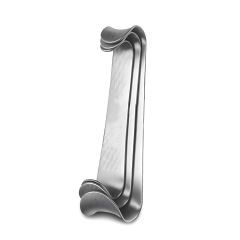
Doyen Abdominal Retractor
The Doyen abdominal retractor has a curved, deep blade that retracts abdominal tissues during procedures such as laparotomies and pelvic surgeries. Its wide blade gives a larger contact surface for controlled tissue retraction.
It may be used as a C-section retractor instrument when suitable for surgical exposure. The right size and blade profiles must be selected as per the operative site and surgeon's preference.
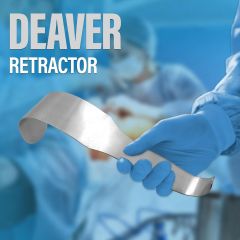
Deaver Curved Abdominal Retractor
Another type of retractor is the Deaver curved abdominal retractor. It has a flat, wide, and curved ribbon-like blade that gives access to deep areas of the abdominal cavity. It is used for retracting abdominal walls and organs during procedures involving areas such as the upper gastrointestinal tract and liver. Its curved and long profile makes it suitable for deep organ tissue retraction, where controlled exposure and greater reach are required.
Superficial & Precision Handheld Retractors
Superficial and precision retractors are the smaller handheld instruments used to control exposure of wound margins and soft tissues. Their compact design allows surgeons to adjust tissue position as per the requirements of the operative field.
Langenbeck L-Shape Retractor
The Langenbeck L-shape retractor has a right-angle blade designed to hold wound margins and retract soft tissue. It is used in procedures involving bones, joints, and the throat, or general surgical applications.
It is useful as an orthopaedic wound margin retractor, especially when the surgeon requires controlled access around the incision.
Kilner Senn Miller (Cat Paw) Retractor
The Kilner Cat Paw retractor is also called the Senn-Miller retractor. It has a dual-ended design, pointed prongs, and a flat blade.
The two ends give options for different soft-tissue retraction requirements. Its pronged end gives focused retraction, and the flat blade gives a broader contact surface. On the basis of its design and size, it may be used in delicate soft-tissue procedures, including selected ENT surgical retractor applications.
Specialty Oral & Gynaecological Retractors
Specialty retractors are used for particular anatomical areas and procedures. Their working surface and shape are adapted to give access and keep the surrounding tissues appropriately positioned.
Kilner C-Shape Cheek Retractor Set
The Kilner C-shape cheek retractor set is available in a C-shaped frame that holds the lips and cheeks away from the working area. It is used during oral, dental, and facial procedures where access to the mouth needs to be maintained.
An intraoral surgical retractor gives clear access to the operative area and keeps soft tissues away from the field.
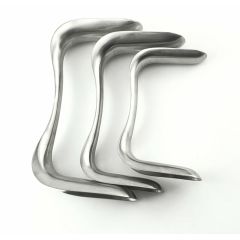
Sims Double-Ended Speculum Set
The Sims double-ended speculum set has curved, duckbill-shaped blades designed for vaginal examination and gynaecological procedures. It is used to retract the vaginal wall and give visibility during examinations and minor procedures.
It works as a posterior vaginal wall retractor, based on the procedure and positioning. While comparing the Sims speculum set S M L price, you should consider the sizes, material, finish, and overall instrument specifications instead of price only.
Surgical Retractor Comparison Guide
Below is a quick surgical retractors list with uses, and it helps OT teams compare the common types of surgical retractors and their uses by application and design.
|
Retractor Name |
Blade Shape / Design |
Main Surgical Specialty |
Use Case |
|
Doyen Abdominal Retractor |
Deep, curved blade |
General and abdominal surgery |
Retraction of abdominal tissues |
|
Deaver Retractor |
Long, broad curved blade |
Abdominal surgery |
Deep tissue and organ retraction |
|
Langenbeck Retractor |
Right-angle L-shaped blade |
Orthopaedic and general surgery |
Wound margin and soft-tissue retraction |
|
Kilner Senn Miller |
Pronged and flat dual-ended design |
General, plastic, and selected ENT procedures |
Controlled superficial tissue retraction |
|
Kilner C-Shape Cheek Retractor |
C-shaped frame |
Dental and oral surgery |
Retraction of lips and cheeks |
|
Sims Speculum |
Curved duckbill blades |
Gynaecology |
Vaginal examination and tissue retraction |
Buying High-Grade Surgical Retractors Online
Material quality is an important factor to consider while choosing surgical retractors for repeated clinical use. 410 Grade Stainless Steel is widely used for surgical tools because it provides good hardness, corrosion resistance, and strength. These properties make it suitable for instruments that undergo autoclave sterilization and repeated cleaning when following the manufacturer's recommended procedures.
While planning to buy surgical retractors online, you should check the steel grade, dimensions, blade design, finishing, and application. You should buy OT instruments wholesale in India through an established wholesale surgical instruments supplier that helps doctors source consistent products for OT requirements.
Conclusion
Buying the right surgical retractor depends on the surgical site, procedure, tissue depth, and exposure level. From deep abdominal retractors such as Doyen and Deaver to instruments such as Langenbeck and Kilner retractors, every design serves a unique clinical purpose.
You should understand the types of surgical retractors and their uses to select the right instrument for efficient tissue retraction. Make sure to consider the quality of construction, sizing, and proper sterilisation practices to choose the right instrument.
Frequently Asked Questions about Surgical Retractors
What are the main types of surgical retractors used in the operating room?
Surgical retractors are broadly categorized into handheld retractors (such as Doyen, Deaver, and Langenbeck) and self-retaining retractors (such as Weitlaner and Gelpi). They are further classified by clinical application into abdominal, superficial, orthopaedic, oral/maxillofacial, and gynaecological retractors.
What is the difference between Doyen and Deaver retractors?
The Doyen retractor features a wide, deep curved blade designed specifically for retracting heavy abdominal wall tissue during pelvic surgeries and C-sections. The Deaver retractor utilizes a long, flat, ribbon-like curved blade built for broad, atraumatic organ and deep tissue retraction in upper gastrointestinal procedures.
Why is 410 grade stainless steel preferred for surgical retractors?
410 grade surgical stainless steel offers exceptional tensile strength, surface hardness, and superior corrosion resistance. This ensures that instruments maintain structural integrity, blade alignment, and surface finish through repeated high-temperature hospital autoclave sterilization cycles.
When is a Langenbeck retractor used during surgery?
The Langenbeck retractor features an L-shaped right-angle blade designed to provide clear exposure of wound margins. It is commonly used in orthopaedic surgeries, ENT procedures, and general surgeries requiring precise subcutaneous soft-tissue separation near incision edges.
How does a Kilner Senn Miller (Cat Paw) retractor function?
The Kilner Cat Paw retractor is a dual-ended handheld instrument featuring a multi-pronged rake on one side and a flat spatula blade on the other. This versatile dual design allows surgeons to perform both delicate pronged tissue holding and broad soft-tissue separation using a single instrument.
Which retractor is commonly used for C-section procedures?
The Doyen abdominal retractor is one of the most widely used instruments for C-sections (Cesarean births). Its wide, deep curved blade safely holds back the lower abdominal wall and bladder flap to optimize fetal delivery and uterine surgical access.
What is the role of a Sims speculum in gynaecological procedures?
A Sims double-ended speculum acts as a posterior vaginal wall retractor. Its curved duckbill blades allow clinicians to gently retract the posterior vaginal wall during outpatient examinations, Pap smears, IUCD insertions, and minor gynaecological surgeries.
What is the main operational difference between handheld and self-retaining retractors?
Handheld retractors require a surgical assistant or scrub nurse to continuously hold and dynamically adjust the instrument during surgery. Self-retaining retractors feature a mechanical locking mechanism (such as a ratchet or screw) that holds tissue open automatically without assistant intervention.
How do you select the right surgical retractor blade size?
Retractor size selection depends on the depth of the anatomical target, tissue tension, and incision size. Deep abdominal cavities require long, broad blades (such as 3"–4" Deaver or Doyen models), whereas superficial procedures or skin margins require small 0.25"–1" right-angle blades like the Langenbeck.
Where can hospitals buy surgical retractors wholesale online in India?
Hospitals and surgical centers can buy 410 grade stainless steel surgical retractors directly online from certified medical manufacturers like Otica Healthcare. Ordering directly provides access to wholesale institutional pricing, multi-size sets, and express pan-India OT delivery.
